Demolition for small businesses and property managers: what changes
By Sofia Vogel · Updated 2026-08-14
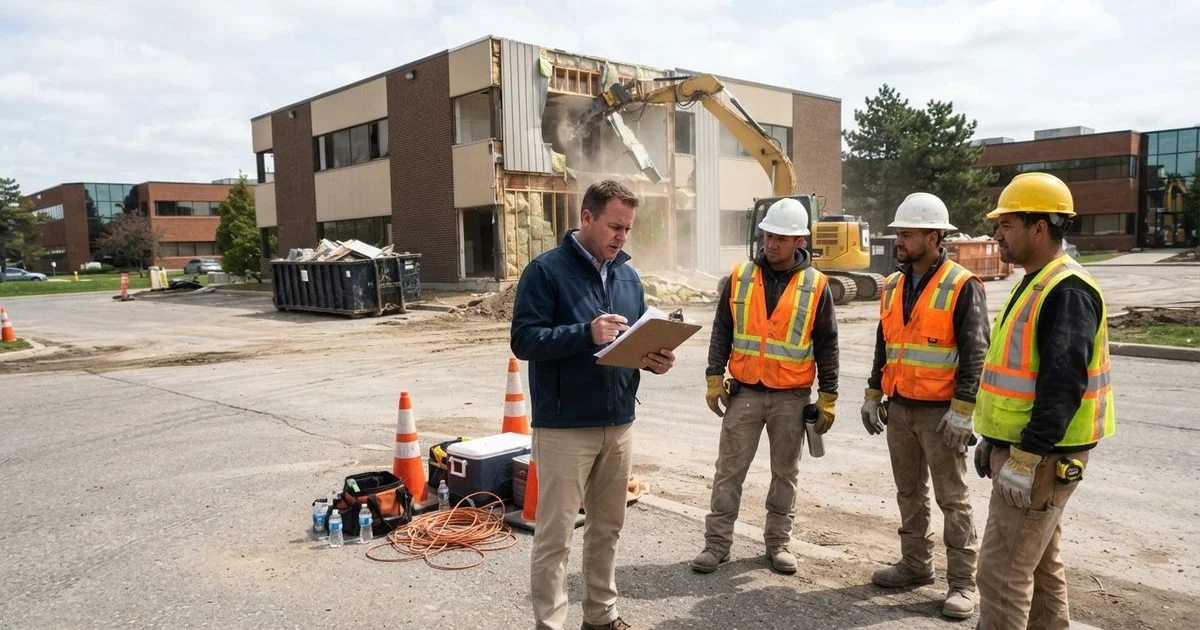
Commercial and industrial demolition carries a different set of logistics than tearing down a house, mostly because there’s usually a business, a lease, or multiple stakeholders involved rather than a single owner making a straightforward decision. If you’re a small business owner or a property manager handling this for the first time, the Ontario Excavation & Demolition Directory put together this rundown of what actually changes.
Occupancy and tenant coordination
The biggest practical difference is that commercial buildings are often still occupied, at least partially, when demolition planning begins. Full structural demolition almost always requires complete vacancy for safety reasons, but selective or interior demolition confined to one unit can sometimes proceed while neighbouring tenants remain, depending on shared systems like HVAC, electrical, or fire suppression.
Property managers need to build tenant notice periods into the project timeline well before a demolition contractor is even involved. Lease terms often dictate notice requirements, and getting this sequencing wrong is one of the more common causes of project delays in commercial work.
Permits and inspections take longer
Commercial demolition permits typically go through more layers of review than a residential teardown: fire safety, structural engineering sign-off for larger buildings, and sometimes environmental assessment if the building’s history suggests possible contamination (older industrial sites in particular). Budget more lead time for this stage than you would for a house.
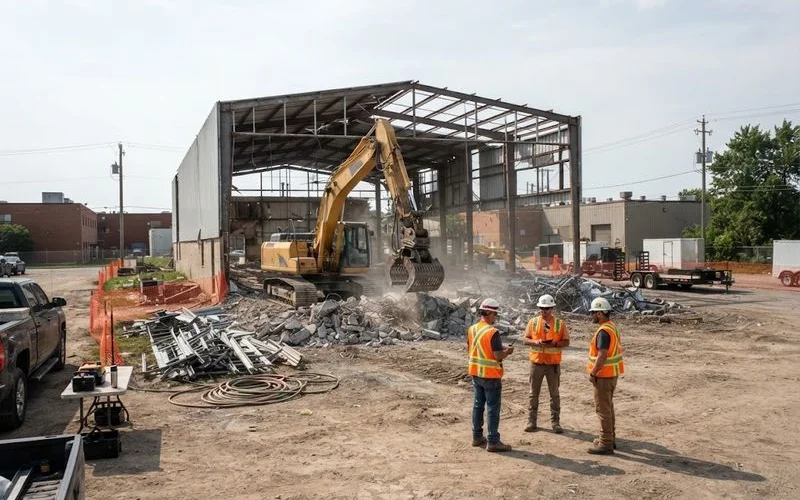
What to ask a contractor as a property manager
- Do they have experience with occupied or partially occupied buildings? Not every residential-focused demolition company is set up for phased work around active tenants.
- How do they handle shared building systems like fire alarms, sprinklers, or HVAC that might be tied into the section being demolished?
- What’s their approach to noise and dust management if neighbouring units or businesses remain operational nearby?
- Can they provide a certificate of insurance naming the property owner, which is often a requirement for commercial leases and lender agreements?
| Consideration | Residential demolition | Commercial demolition |
|---|---|---|
| Occupancy during work | Usually vacant already | Often requires phased vacancy planning |
| Permit review time | Weeks | Weeks to months, more review layers |
| Insurance documentation | Standard | Often requires certificates naming owner/lender |
| Shared systems | Rare | Common, needs coordination |
| Stakeholders involved | Usually one owner | Owner, property manager, tenants, sometimes lender |
Budgeting for the full picture
Beyond the demolition itself, factor in potential lost rent during vacancy periods, any lease-required restoration obligations, and the cost of coordinating multiple trades if the demolition is part of a larger redevelopment. Getting a contractor experienced in commercial work to walk the site early, before finalizing tenant timelines, tends to prevent the most common scheduling conflicts.
Coordinating with lenders and insurers
Commercial properties often carry a mortgage or commercial insurance policy that has its own requirements around alterations, including demolition. Some lenders require notice before significant structural work happens on a financed property, and insurers may need to reissue or adjust coverage once a building’s use or condition changes. Loop in your lender and insurer early in the planning process rather than after the contractor is already booked, since either one can require documentation that takes time to gather.
Handling multiple stakeholders
Unlike a homeowner making a single decision, commercial demolition often involves an owner, a property manager, one or more tenants, and sometimes a lender, each with a stake in the timeline and outcome. Getting written sign-off from everyone who needs to approve the work, before scheduling a contractor, avoids the common problem of a project stalling midway because one stakeholder wasn’t properly looped in.
A realistic project sequence
- Confirm the scope and get sign-off from ownership and any lender requirements.
- Issue tenant notice according to lease terms, with enough lead time for relocation or vacancy.
- Apply for permits, building in extra review time for fire safety and structural sign-off.
- Schedule utility disconnection or isolation for the affected section.
- Complete the demolition, then restore or hand off the space per lease and insurance requirements.
Small business owners handling a single-unit renovation face a lighter version of this same sequence: fewer stakeholders, but the same need to confirm lease terms and insurance requirements before assuming the timeline will move quickly.
You can compare commercial and industrial demolition contractors in Ontario and see how listings are scored for completed-job history in our ranking methodology before requesting quotes.
FAQ
- Can commercial demolition happen while a building is partially occupied?
- Sometimes, for selective or interior demolition confined to a vacant unit, but full structural demolition typically requires the building to be fully vacated first for safety reasons.
- Who handles tenant notification before commercial demolition?
- Usually the property owner or manager, following lease terms and any municipal notice requirements. The demolition contractor isn't responsible for tenant relations, only the physical work.
- Does commercial demolition require different permits than residential?
- The permit process is similar in structure but commercial projects often face additional review for larger structures, fire safety, and sometimes environmental assessment depending on the building's history and use.
- How far in advance should a property manager schedule commercial demolition?
- Build in more lead time than for residential work, often several weeks to a couple of months, to account for tenant vacancy timelines, permit review, and coordination with utility providers.