What demolition costs in Ontario and what changes the price
By Sofia Vogel · Updated 2026-08-03
Demolition pricing is one of the least transparent parts of a renovation or teardown project, mostly because it depends on so many site-specific details. Here’s a realistic breakdown of what changes the number, so a quote makes sense instead of feeling arbitrary.
Typical cost ranges by structure
These ranges reflect labour, equipment, permits and standard debris disposal for a typical Ontario property. They’re a starting point for budgeting, not a substitute for a contractor’s site visit.
| Structure type | Typical size | Rough cost range |
|---|---|---|
| Garage or shed | 200-600 sq ft | $800 - $3,000 |
| Wood-frame house | 1,200-2,500 sq ft | $10,000 - $28,000 |
| Brick or masonry house | 1,200-2,500 sq ft | $15,000 - $38,000 |
| Commercial building | 2,000-6,000 sq ft | $30,000 - $95,000 |
Access matters as much as size. A property with a wide driveway or laneway lets equipment work efficiently; a tight urban lot with a shared wall or narrow access can add 15-35% to the labour side of the job simply because everything takes longer and sometimes has to be done by hand instead of machine.
What actually drives the price
- Debris volume and disposal. Hauling and tipping fees are billed by volume and material. A full house teardown often generates 80-150 cubic yards of mixed debris; concrete and brick cost more to dispose of than wood framing because of weight and landfill tipping rates.
- Hazardous material. If asbestos, lead paint, or other designated substances are present, abatement is priced and performed separately before the structure comes down, and it can meaningfully raise the total project cost.
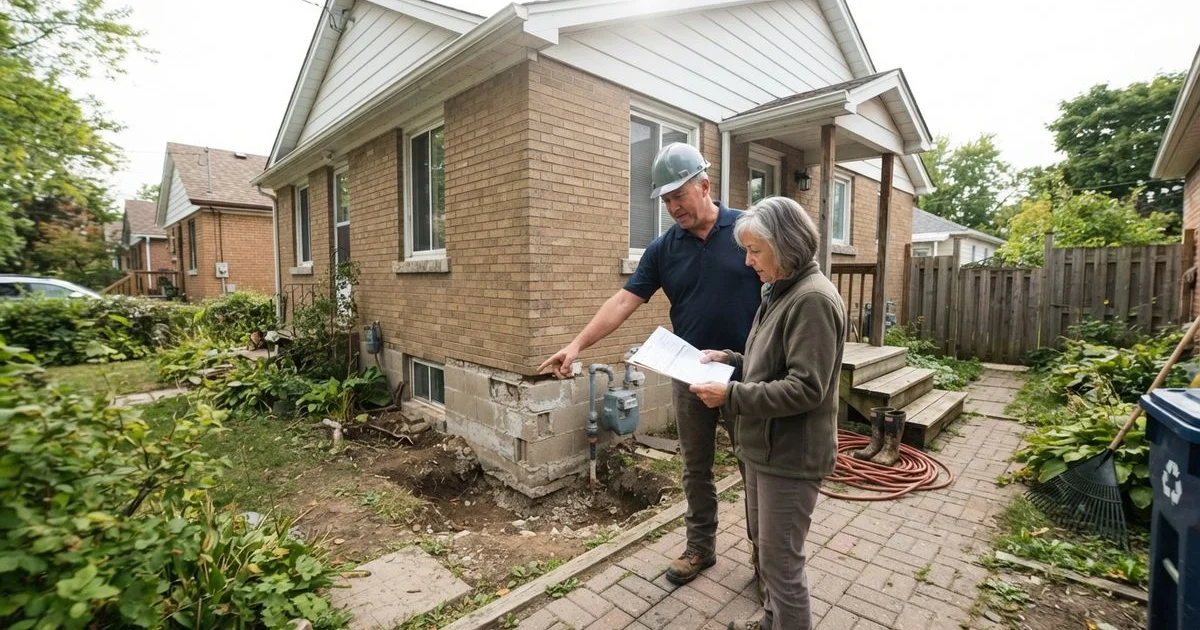
- Utility disconnection. Gas, electrical and water services need to be safely capped or disconnected before demolition, usually arranged through the utility provider and billed as a separate step.
- Permit and inspection fees. Municipal demolition permit fees vary by city and by structure size, and larger jobs may require a structural engineer’s report first.
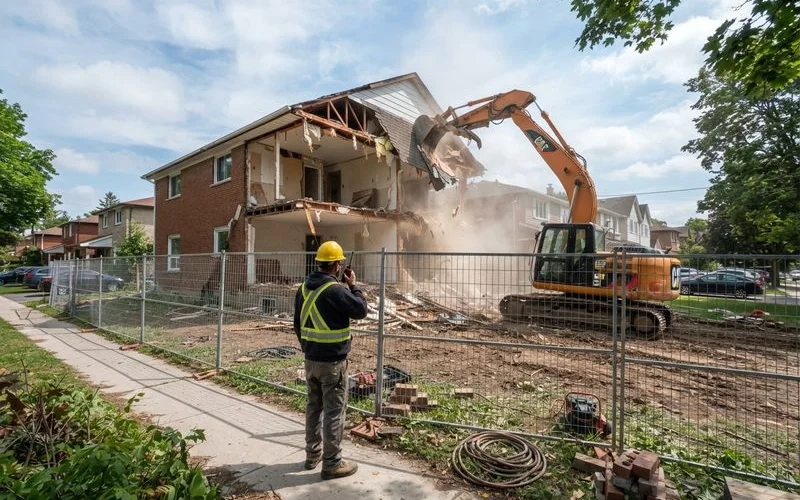
- Site access and equipment size. Tight urban lots sometimes require smaller excavators or partial hand demolition near property lines, which slows the job and raises labour cost.
What’s usually quoted separately
A common source of sticker shock is discovering that a low initial quote didn’t include everything. Ask specifically whether these are in or out of the number you’re comparing:
- Permit application and fees
- Hazardous material testing and abatement
- Utility disconnection charges
- Tree removal, fence removal, or landscaping restoration
- Final grading of the lot after debris is cleared
Getting this list in writing before you compare two bids is the single best way to avoid a mismatch later. A contractor who won’t itemize what’s excluded is worth a second question.
Financing and is it worth it
Demolition financing is usually folded into whatever is funding the larger project, whether that’s a construction loan, a home equity line, or a renovation mortgage. Lenders generally treat demolition as a standard pre-construction cost as long as it’s documented with an itemized invoice.
Whether it’s worth it depends entirely on the alternative. For a structure that’s structurally compromised, contaminated, or simply beyond the point where renovation makes financial sense, demolition and rebuild often costs less over the life of the project than trying to salvage a building that fights you every step of the way. For everything short of that, get a renovation estimate alongside the demolition quote before deciding.
Getting a fair price
Because costs swing so much by structure, access and hazardous material, the best way to know what’s fair for your specific property is to get more than one quote from contractors who’ve actually walked the site.
Comparing quotes without comparing apples to oranges
Two quotes for the same house can look wildly different if one contractor assumes standard access and the other has actually walked the property and noticed the shared driveway or overhead line that complicates equipment access. Ask each contractor to note the specific assumptions behind their number: expected debris volume, whether hazardous material testing is included, and what access conditions they priced for. A quote with clear assumptions written down is easier to compare fairly than one that’s just a single number.
It also helps to ask how each contractor handles a scope change if something unexpected turns up, like a buried oil tank or more concrete in the foundation than expected. A contractor who has a clear process for pricing a surprise, rather than using it as an excuse to renegotiate the whole job, is generally the safer choice even if their initial number isn’t the lowest.
You can compare demolition contractors across Ontario on the Ontario Excavation & Demolition Directory and see how listings are scored on completeness and responsiveness in our ranking methodology before you start requesting quotes.
FAQ
- How much does it cost to demolish a house in Ontario?
- A typical wood-frame house teardown often lands in the low-to-mid five figures, with brick or masonry homes running higher. Site access, debris volume and any hazardous material testing all change the final number.
- Is demolishing a garage cheaper than demolishing a house?
- Yes, by a wide margin. A garage or shed is a much smaller structure with far less debris, so it's usually priced in the low thousands rather than tens of thousands.
- What's usually not included in a demolition quote?
- Permit fees, asbestos or hazmat testing and abatement, utility disconnection charges, and tree or landscaping removal are commonly quoted separately. Ask what's excluded before comparing two bids.
- Why do two demolition quotes for the same house vary so much?
- Different contractors estimate debris volume, disposal fees and labour differently, and some build in a margin for unknowns like hidden hazardous material. A lower bid isn't automatically the better deal if it skips a step.