Does insurance cover demolition in Ontario?
By Sofia Vogel · Updated 2026-08-11
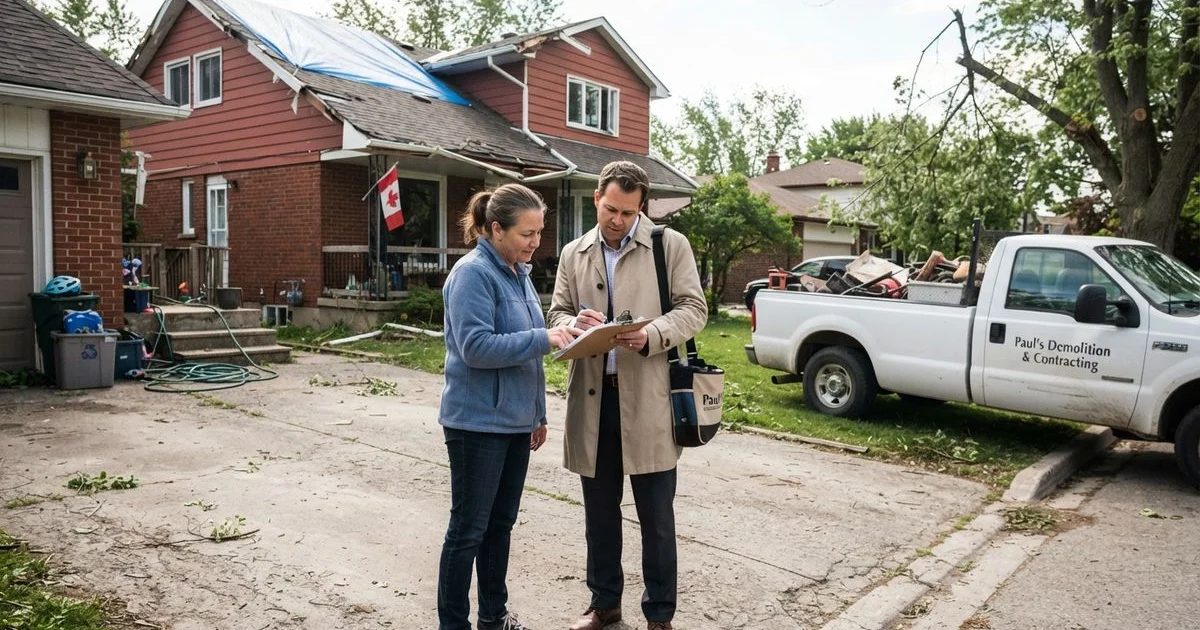
Insurance and demolition intersect in a narrower set of situations than most people assume. Understanding where that line sits before you’re in the middle of a claim, or before you decide a voluntary teardown might somehow qualify, saves a lot of frustration.
When insurance typically covers demolition
The most common scenario is damage from a covered peril, fire, severe storm, or in some cases flood if you carry that specific coverage, that leaves a structure unsafe or not economically repairable. In that case, most homeowner and commercial property policies that cover the underlying peril will also cover the cost to demolish what’s left, as part of settling the claim.
The key phrase is “covered peril.” If your policy excludes flood damage and a flood is what compromised your structure, the demolition tied to that damage likely isn’t covered either, even though the building genuinely needs to come down.
When it typically doesn’t
Voluntary demolition. If you’ve decided to tear down a home to build something new, that’s a planned project, not an insurance event, regardless of the home’s age or condition.
Gradual deterioration. Most policies exclude damage from wear, neglect, or gradual deterioration over time. A structure that’s become unsafe because of age or lack of maintenance, rather than a sudden covered event, generally isn’t a demolition insurance situation.
Pre-existing condition discovered during a renovation. Finding structural issues once you’ve already started a voluntary renovation doesn’t typically trigger coverage, since the demolition wasn’t caused by a covered peril.

How to document a demolition claim properly
- Get a written damage assessment from a contractor or structural engineer confirming the structure isn’t safely repairable.
- Photograph everything before any demolition work starts, not just the damage but the surrounding property.
- Get an itemized demolition quote, separate from any rebuild estimate, so the insurer can evaluate the demolition cost on its own.
- Confirm with your insurer before work starts whether they need to inspect the property first or approve the contractor.
- Keep every invoice, including any hazardous material testing or abatement tied to the demolition, since these are sometimes questioned separately from the base demolition cost.
| Scenario | Usually covered | Usually not covered |
|---|---|---|
| Fire damage, structure unsafe | Yes, if peril is covered | n/a |
| Storm or wind damage, structure unsafe | Often, if peril is covered | Flood damage under a policy without flood coverage |
| Voluntary teardown for a rebuild | n/a | Yes, not covered |
| Gradual deterioration or neglect | n/a | Yes, not covered |
| Asbestos abatement tied to a covered claim | Sometimes, confirm with insurer | Abatement unrelated to a claim |
What to do if you’re not sure
Call your insurer or broker before scheduling any demolition work tied to damage, even if you’re confident it’s covered. Some policies require pre-approval of the contractor or the scope of work, and demolishing before that conversation happens can complicate the claim. If a contractor tells you “insurance will definitely cover this” before your insurer has confirmed it, treat that as a guess, not a guarantee.
You can browse demolition contractors experienced with insurance-related teardowns on the Ontario Excavation & Demolition Directory, and see how listings are scored for responsiveness in our ranking methodology.
Working with your contractor and insurer together
Once a claim is approved, keep the lines of communication open between your contractor and your insurer rather than treating them as separate conversations. Some insurers want to review the demolition scope before work starts to confirm it matches what was approved; others simply want the final invoice. A contractor experienced with insurance-related demolition will usually know what documentation a given insurer typically expects and can help you avoid delays in reimbursement.
If a claim is denied
If your insurer denies coverage for a demolition you believed was covered, ask for the specific reason in writing. Denials sometimes come down to a technicality, like a missing inspection report or a peril exclusion you weren’t aware of, that can be addressed or appealed. A public adjuster or insurance lawyer can help evaluate whether a denial is worth challenging, particularly for larger claims where the demolition and rebuild cost is substantial.
Separating the demolition claim from the rebuild
Even when demolition is covered, the rebuild that follows is often a separate conversation with your insurer, particularly around whether you’re rebuilding to the same specifications or upgrading. Keep the two conversations distinct in your documentation so the demolition claim doesn’t get held up waiting on decisions about the rebuild.
This guide is general information, not insurance or legal advice. Every policy is different, so confirm coverage specifics directly with your insurer before making decisions based on assumed coverage.
FAQ
- Will my home insurance pay for demolition after a fire?
- Often yes, if the policy covers the peril that caused the damage and the structure is deemed unsafe or unrepairable. Coverage details vary by policy, so confirm the specifics with your insurer before assuming it's included.
- Does insurance cover demolition if I just want to tear down and rebuild?
- No. Voluntary demolition for a renovation or rebuild isn't an insurance event; it's a planned project you pay for directly or finance separately.
- What documentation does an insurer need for a demolition claim?
- Typically a contractor's assessment of the damage, photos, an itemized demolition quote, and sometimes an engineer's report confirming the structure isn't safely repairable.
- Is asbestos abatement covered under a demolition insurance claim?
- Sometimes, if it's required to safely complete the demolition covered by the claim. Ask your insurer specifically, since abatement costs can be substantial and policies vary in how they treat it.