The safety hazards of DIY demolition that trained crews train for
By Sofia Vogel · Updated 2026-08-19
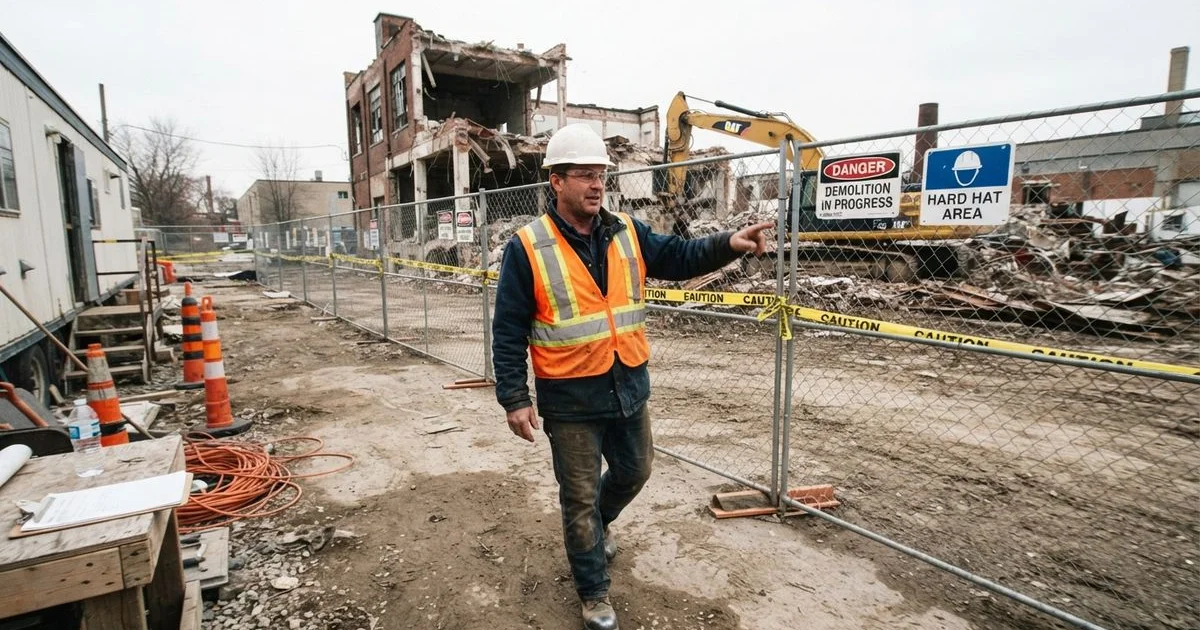
Demolition looks like the destructive, low-skill half of construction from the outside: knock it down, haul it away. In practice, trained crews follow specific safety protocols for reasons that aren’t always obvious until something goes wrong. Here’s what those protocols are actually protecting against.
Structural collapse risk
Buildings are held together by a specific balance of load-bearing elements. Removing the wrong piece, or removing pieces in the wrong order, can destabilize a structure well before it’s actually meant to come down, sometimes with no visible warning. This is why demolition crews sequence work carefully rather than starting wherever’s convenient, and why removing a load-bearing wall or beam without understanding what it supports is genuinely dangerous, not just risky in a legal sense.
Falling debris and unstable surfaces
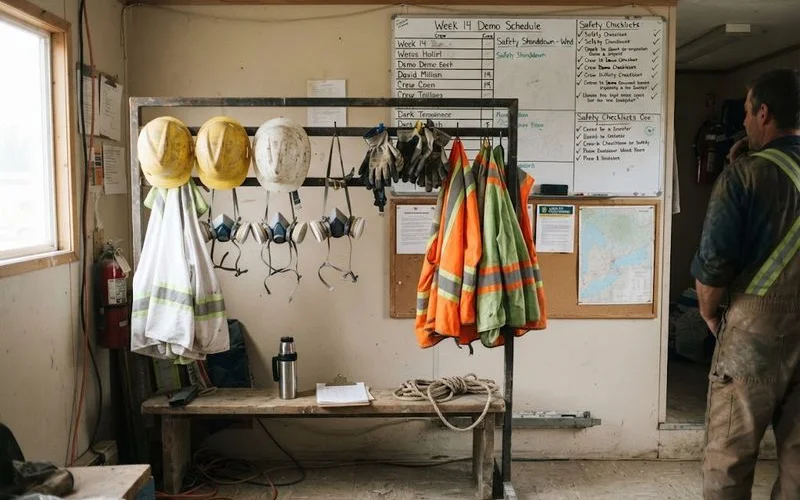
Once a structure starts coming apart, footing becomes unpredictable and debris can shift or fall without warning. Professional crews maintain clear zones, use appropriate personal protective equipment, and often work from outside a structure with machinery rather than inside it by hand, specifically to reduce exposure to this risk.
Hazardous material exposure
This is the hazard that’s easiest to underestimate because it’s invisible until it’s a problem. Homes and buildings constructed before the early 1990s often contain asbestos in flooring, insulation, or joint compound, and lead in older paint layers. Disturbing these materials without testing first, whether by sanding, cutting, or demolishing, can release particles into the air that pose a real long-term health risk. This is precisely why a Designated Substances Survey happens before demolition on older structures, not as a formality but as a genuine safety step.
Utility strikes
Cutting into a wall or excavating without confirming what’s behind or beneath it risks striking electrical wiring, gas lines, or water pipes. Beyond the immediate danger of a strike, an unnoticed gas leak from damaged piping can turn a demolition site into a serious hazard hours after the work seems finished.
| Hazard | Why trained crews handle it differently |
|---|---|
| Structural collapse | Careful sequencing keeps the structure predictable until intended |
| Falling debris | Clear zones and protective equipment reduce exposure |
| Hazardous material | Testing and containment prevent airborne exposure |
| Utility strikes | Locates and disconnection confirmed before work starts |
| Heavy equipment operation | Trained operators understand load limits and site conditions |
What this means if you’re considering doing it yourself
None of this means every demolition task requires a professional. Small, contained jobs with no structural, hazardous material, or utility involvement are genuinely manageable for a careful homeowner. The hazards above are the specific reasons why anything beyond that scope, a whole structure, anything load-bearing, or anything in a pre-1990s building, is worth handing to a trained crew rather than tackling with good intentions and a rented sledgehammer.
Equipment hazards that are easy to underestimate
Even hand tools carry more risk in demolition than in typical home repair. A reciprocating saw cutting into an unknown wall cavity can hit wiring or plumbing without warning. A sledgehammer swung at a load-bearing element can cause more damage than intended if the material behaves differently than expected. Heavy equipment, when it’s involved, adds an entirely different scale of risk: tip-over hazards on uneven ground, blind spots around the machine, and load limits that aren’t obvious to someone without operating experience.
Why training changes the outcome, not only the speed
It’s tempting to think professional crews are simply faster at the same task an untrained person could do more slowly and carefully. In practice, training changes how a job is approached from the start: which element gets removed first, what gets shored up before it’s touched, and when to stop and call in a specialist rather than push through. That decision-making is harder to replicate from a video or a guide than the physical task itself.
A reasonable middle ground
If you’re planning a project that falls into a genuine gray area, larger than a small shed but not a full structural teardown, consider a paid consultation with a demolition contractor before deciding. Many will walk the site and give an honest opinion on what’s safely within reach for a homeowner and what isn’t, even if you end up doing part of the work yourself.
If you’re weighing a specific project, our ranking methodology explains how contractors listed on the Ontario Excavation & Demolition Directory are evaluated for track record and responsiveness if you decide the job needs a professional.
This guide is general safety information, not a substitute for a site-specific risk assessment by a qualified professional.
FAQ
- What's the most common injury in demolition work?
- Falls, being struck by falling debris, and injuries from power tools or unstable structures rank among the most common. Trained crews use specific sequencing and protective equipment to reduce these risks.
- Is it dangerous to remove drywall or flooring in an older home myself?
- It can be, mainly because of what might be hidden in the material, like asbestos in older joint compound or floor tile adhesive, rather than the physical act of removal itself. Testing first matters more than most people realize.
- Do I need special protective equipment for small demolition jobs?
- At minimum, safety glasses, gloves, sturdy footwear, and a properly rated dust mask for anything generating fine particles. For anything involving suspected hazardous material, that's not enough on its own; stop and get it tested.
- Why do professional crews sequence demolition in a specific order?
- Removing structural elements in the wrong order can destabilize a building unexpectedly. Trained crews follow a sequence that keeps the structure predictable until it's meant to come down.