Hidden hazards in older Ontario homes before you demolish or renovate
By Sofia Vogel · Updated 2026-08-04
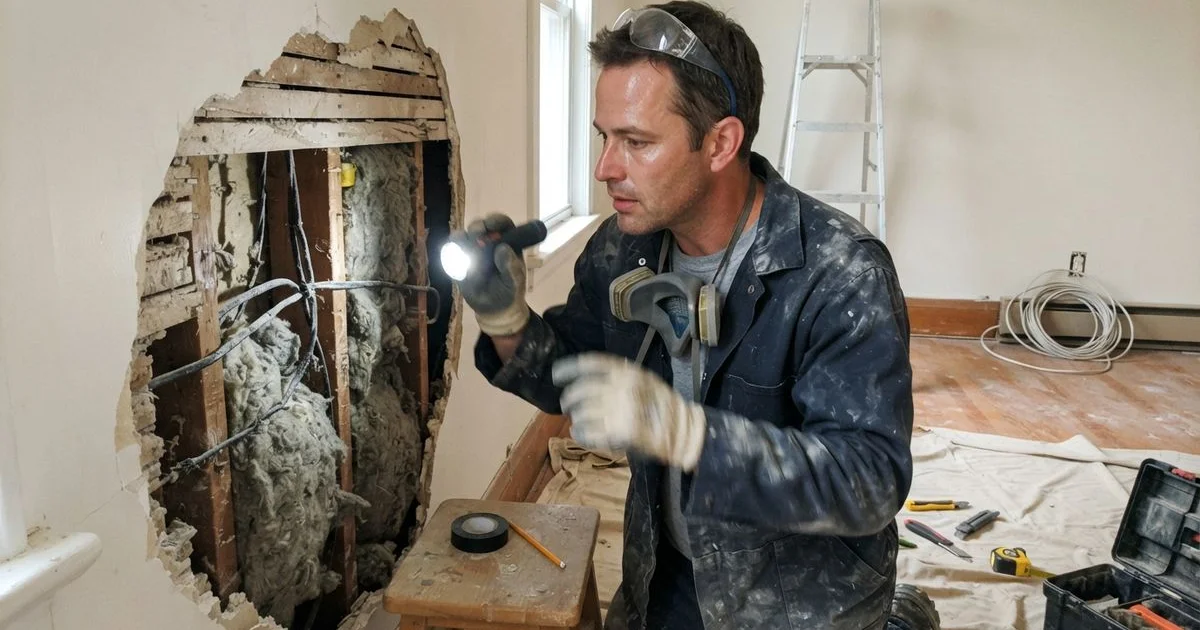
If your property was built before the early 1990s, there’s a real chance it’s holding onto materials nobody thought twice about at the time: asbestos insulation, lead-based paint, and in some commercial or older residential buildings, PCBs in old caulking or electrical components. None of that is cause for panic if the home is left alone. It becomes a real issue the moment renovation or demolition starts disturbing those materials.
What you’re actually looking for
Asbestos. This shows up in far more places than most people expect: vermiculite attic insulation, pipe and duct wrap, floor tile and the adhesive under it, drywall joint compound, and older roofing and siding materials. Some forms are friable, meaning they crumble and release fibers easily with light disturbance; others are non-friable and bound tightly into a matrix, which changes how they’re classified and removed.
Lead paint. Common in homes built before 1980. It’s most dangerous as dust, generated by sanding, scraping or demolition, not as an intact painted surface.
PCBs. Less commonly discussed but real in older commercial buildings and some homes: found in caulking, electrical ballasts and transformers manufactured before the 1980s.
Mould. Not a designated substance in the same regulatory sense, but a genuine health concern in older homes with a history of water intrusion, especially once walls are opened up during a strip-out.
Why this matters before you touch anything
Disturbing these materials without controls is where risk actually starts. Cutting into asbestos-containing drywall, sanding lead paint, or hauling contaminated material as ordinary debris all release particles into the air on-site and, without proper handling, off-site too. This is also the point where corners get cut on lower-bid demolition and renovation jobs: skipping the survey step is one of the more common shortcuts that creates real liability for the property owner, not just the contractor doing the work.
How testing actually works
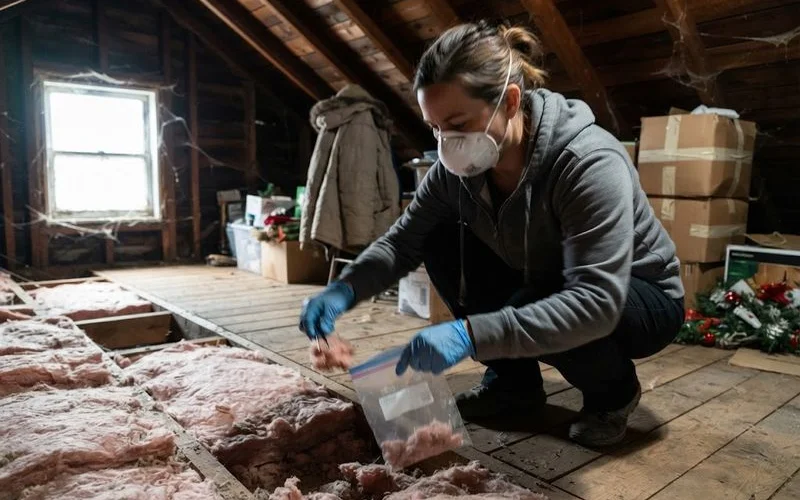
- A qualified inspector or contractor visits the property and identifies suspect materials based on age, location and appearance.
- Samples are taken from suspect materials, small enough to avoid unnecessary disturbance, and sent to an accredited lab.
- Results typically take a few business days to a couple of weeks, depending on the lab and how many samples were submitted.
- If a designated substance is confirmed, an abatement plan is scoped separately from the rest of the demolition or renovation work, following Ontario’s occupational health and safety requirements for that material type.
This is usually bundled into what’s called a Designated Substances Survey, and most municipalities require one before issuing a demolition permit for older structures.
What this means for your budget and timeline
Testing adds a small delay and cost up front, typically resolved within one to two weeks, but it prevents a much bigger problem: a stop-work order mid-project, or a disposal facility rejecting mixed debris because untested hazardous material was found in it. Either of those costs far more time and money than the survey itself.
| Stage | Typical timing |
|---|---|
| Inspection and sampling | 1-3 days to schedule |
| Lab results | 3-10 business days |
| Abatement (if needed) | Scoped and quoted separately |
| Demolition or renovation start | After abatement clearance |
Choosing who does this work
Not every general contractor is trained or licensed to identify and handle designated substances. Ask specifically whether the crew doing your demolition or renovation is equipped for this, or whether they’ll bring in a specialist. You can browse asbestos and hazmat specialists in Ontario directly, and see how the Ontario Excavation & Demolition Directory scores listings for completeness and track record in our ranking methodology.
Buying a property that might have these issues
If you’re purchasing an older property with plans to renovate or demolish, consider making a Designated Substances Survey part of your due diligence before closing, rather than after. Discovering significant asbestos or PCB contamination after you own the property means the remediation cost is entirely yours to plan for, whereas knowing beforehand can factor into your offer or negotiation.
A note on scale
Not every older home has significant hazardous material, and finding a small amount of asbestos-containing floor tile in one room isn’t the same situation as widespread contamination throughout a structure. Testing exists precisely to tell you which scenario you’re actually in, rather than leaving you to guess based on the building’s age alone. Treat a positive test as information to plan around, not a reason to panic.
This guide is general information, not a substitute for a site-specific inspection or medical advice about exposure. If you suspect an existing health issue related to a past exposure, speak with a physician.
FAQ
- How do I know if my house has asbestos?
- Age is the first clue: homes built before the early 1990s are far more likely to contain it in flooring, insulation, drywall compound or pipe wrap. Only lab testing of a sample confirms it, so a visual guess isn't enough to plan around.
- Is it dangerous to live in a house with asbestos if nothing is disturbed?
- Undisturbed, intact asbestos-containing material is generally considered lower risk than material that's crumbling or about to be cut into, drilled, or demolished. The danger comes from disturbance releasing fibers into the air.
- What is a Designated Substances Survey and do I need one?
- It's a survey required before many demolition and renovation projects in Ontario that identifies asbestos, lead, PCBs, mercury and other regulated substances in a building. Most municipalities and contractors require one before a demolition permit is issued.
- Can I test for these hazards myself?
- You can take a sample, but lab analysis has to be done by an accredited lab, and disturbing suspect material to get a sample carries its own risk. Most owners have a qualified inspector take the sample as part of a survey.