Excavating near utility lines in Ontario: what the law requires first
By Sofia Vogel · Updated 2026-08-16
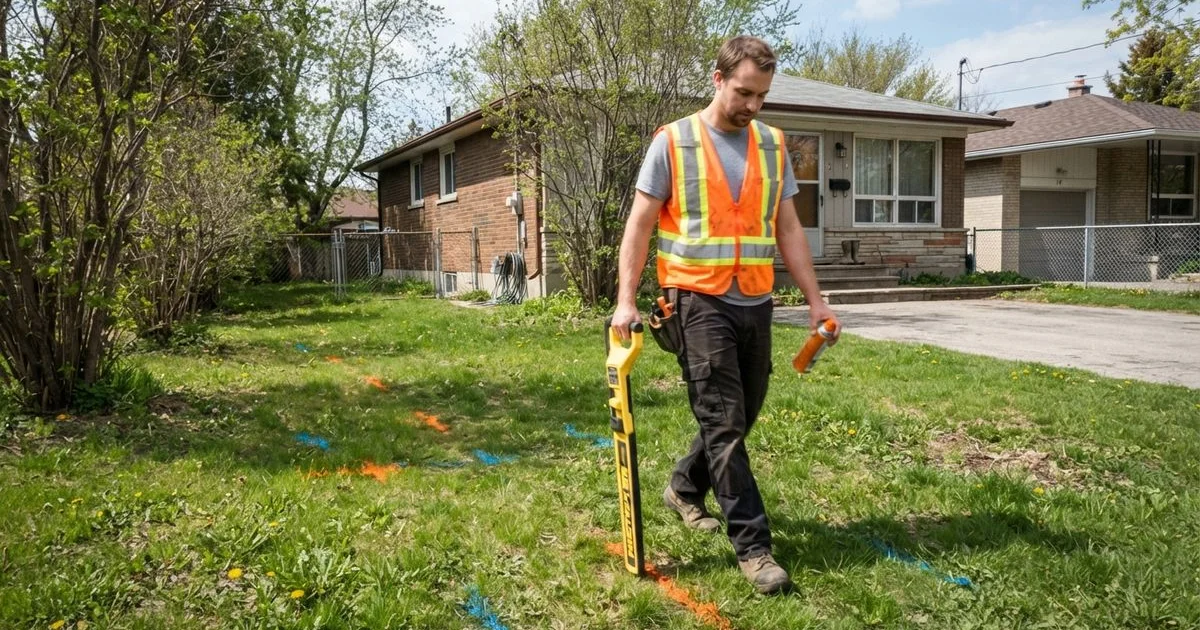
Before any shovel, excavator, or auger touches the ground in Ontario, the law requires confirming what’s buried underneath. This isn’t a suggestion or a best practice, it’s a legal requirement, and skipping it is one of the more serious and preventable mistakes in excavation work.
The requirement in plain terms
Anyone planning to excavate, whether for a foundation, a fence post, a septic system, or general site clearing, has to request a utility locate before starting. This applies to homeowners doing their own digging, not just contractors. The request notifies utility companies (gas, electric, water, telecommunications) so they can mark the location of buried lines on your property before work begins.
How the process works
- Submit a locate request through the national one-call notification system, providing the address and a description of the planned excavation area.
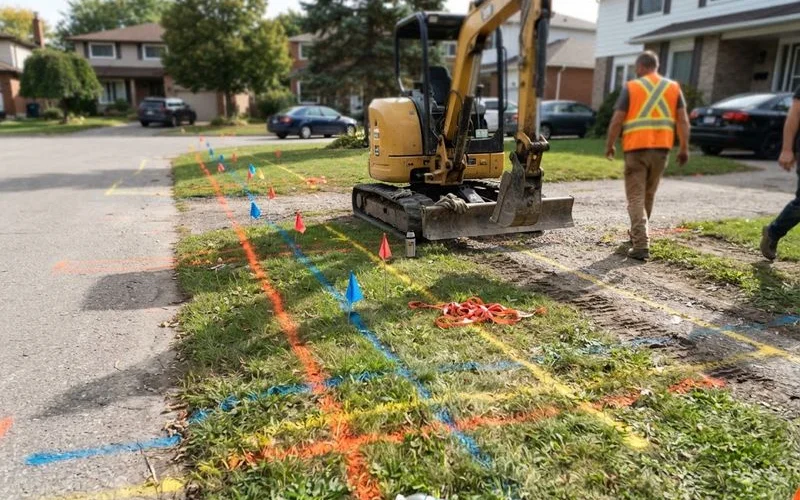
- Utility companies are notified and have a set window, typically a few business days, to respond and mark their lines on site with paint or flags.
- Confirm all expected utilities have responded before starting. If a response is missing, follow up rather than assuming no response means no lines are present.
- Excavate carefully around marked lines, using hand digging or extra caution within a buffer zone around any marked utility.
- If a private line isn’t covered by the public locate service (some property owners have private utilities like an irrigation line or a private hydro connection to a secondary structure), a private locator may need to be hired separately.
Why this matters beyond the legal requirement
Hitting a gas line during excavation isn’t just a repair bill, it’s a genuine safety emergency that can require evacuating the area and calling emergency services. Electrical line strikes carry similar risk. Beyond the immediate danger, the excavator responsible can face liability for repair costs, service interruption to neighbouring properties, and regulatory penalties for skipping the locate process.
| Step | Typical timing |
|---|---|
| Submit locate request | Same day |
| Utility response window | A few business days |
| Confirm all utilities marked | Before excavation starts |
| Private locator (if needed) | Scheduled separately |
What this means for your project timeline
Build the locate request into your project schedule early, since waiting on utility responses can otherwise become an unexpected delay right when you’re ready to start. Most excavation and site clearing contractors handle this request as a standard part of their process, but if you’re managing any portion of the work yourself, don’t assume it’s been taken care of; confirm it directly. Scheduling gets tighter at certain times of year too; the guide to timing excavation work in Ontario covers how the season affects both locates and ground conditions.
You can browse excavation and site clearing contractors in Ontario on the Ontario Excavation & Demolition Directory and see how listings are scored for track record in our ranking methodology.
Homeowners doing their own digging
The locate requirement applies just as much to a homeowner installing a fence post, a deck footing, or a garden pond as it does to a contractor excavating a foundation. It’s easy to assume a small, shallow dig doesn’t need this step, but depth of burial for utility lines varies, and some lines sit closer to the surface than people expect. The request itself takes only a few minutes to submit, which makes skipping it a genuinely unnecessary risk regardless of project size.
What happens if lines are marked in your planned work area
If a locate reveals a utility line running directly through where you planned to dig, you generally have a few options depending on the situation: adjust the location of the planned excavation, hand dig carefully within a buffer zone around the marked line, or in some cases arrange for the utility to be temporarily relocated or protected, which the utility provider coordinates. A contractor experienced in this situation can usually advise which option makes the most sense for a specific project.
Keeping records of the locate
Once markings are in place, take photos before excavation starts and keep a record of your locate request confirmation number. If a utility strike does occur despite following the process correctly, this documentation matters for establishing that the required steps were followed.
This guide is general information about how the locate process typically works and isn’t a substitute for confirming exact requirements for your specific project and location.
FAQ
- Is it legal to dig without requesting a locate first?
- No. Ontario law requires contacting the utility locate service before any excavation, and skipping it can result in fines, liability for damage, and dangerous strikes on gas or electrical lines.
- How long does a utility locate request take?
- Typically a few business days, though it can vary depending on how many utility operators need to respond and how complex the site is. Request it well before your planned start date.
- Does a locate request cost anything?
- The standard locate request service is free for the person requesting it. Costs can arise if private, on-property utility lines need a separate private locator, since public locate services generally only mark public infrastructure.
- What happens if a contractor hits a gas or electrical line during excavation?
- It's treated as a serious incident requiring immediate evacuation of the area and notification of the utility and emergency services. It can also trigger significant liability for repair costs and any resulting damage or injury.