The best time of year to schedule demolition or excavation in Ontario
By Sofia Vogel · Updated 2026-08-22
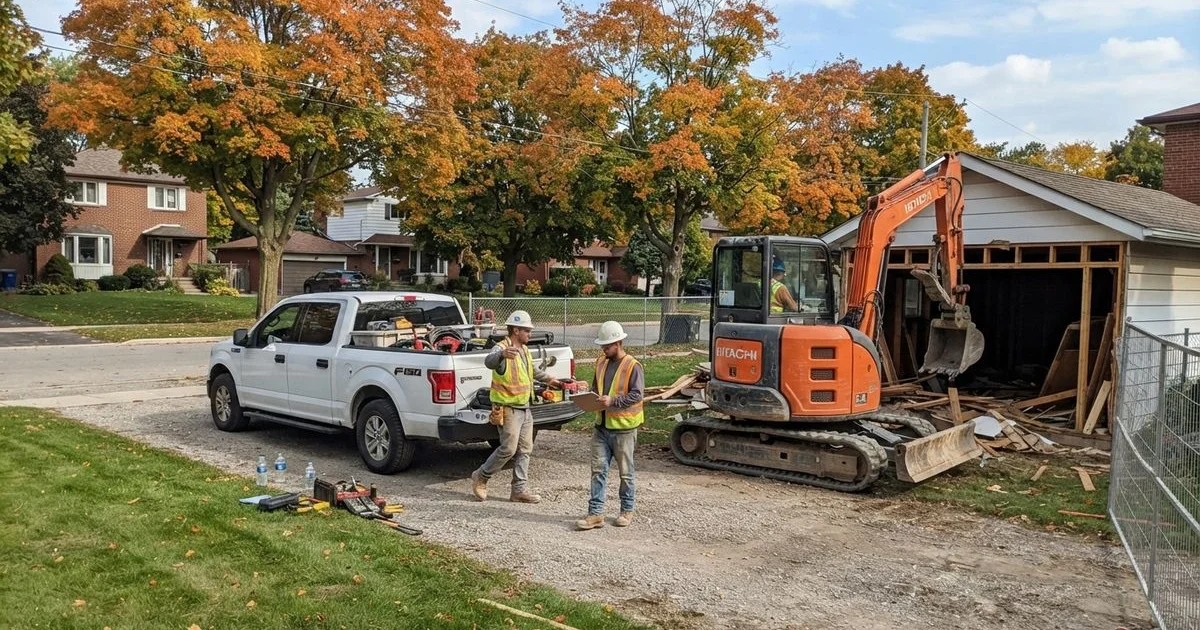
Ontario’s seasons genuinely affect how demolition and excavation projects get scheduled, priced, and completed, more than most people expect until they’re trying to book a contractor in the wrong month.
Winter: frozen ground slows excavation
Structural demolition itself, tearing down a building, can happen in winter without much issue. What winter does affect is anything involving digging or grading: frozen ground is harder to excavate, foundation removal and final grading can take longer, and some contractors adjust pricing or availability for winter groundwork. If your project includes excavation for a new foundation right after demolition, winter can add real time to that specific stage.
Spring: high demand, longer waits
Spring is typically the busiest season for demolition and excavation contractors in Ontario, as property owners who held off over winter all try to get work done before summer construction ramps up further. This is the season most likely to come with longer wait times for scheduling, so booking early, even in late winter, tends to secure a better spot in the queue than waiting until the ground actually thaws.
Summer: peak season, plan around weather
Summer offers the most workable ground conditions and the longest daylight hours, but it’s also peak season across the whole construction industry, so contractor availability can be tight. Heavy summer storms can occasionally delay excavation and grading work, though less predictably than a full winter freeze.
Fall: a practical window before the ground freezes
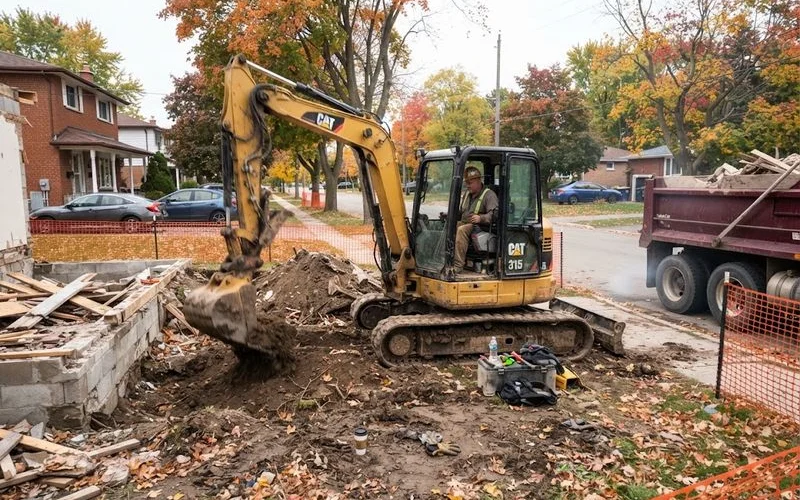
Fall is often a good balance: ground conditions are still workable, contractor demand has usually eased from the summer peak, and there’s still time to complete a project before winter conditions return. Projects that need excavation or grading completed before winter should aim to start no later than early-to-mid fall to leave buffer room.
| Season | Demolition | Excavation/grading | Contractor demand |
|---|---|---|---|
| Winter | Workable | Slower, frozen ground | Lower, often shorter wait |
| Spring | Workable | Workable once thawed | Highest, longer wait |
| Summer | Workable | Best conditions | High |
| Fall | Workable | Good, before freeze | Moderate |
Planning around permits, not just weather
Seasonal timing isn’t only about ground conditions. Permit processing volume can also fluctuate seasonally, with municipalities sometimes seeing a spring influx of applications that slows review times. Starting the permit process in late winter, even if the physical work is planned for spring or summer, is one of the more reliable ways to avoid the seasonal bottleneck rather than get caught in it.
Matching timing to project type
Not every project needs the same seasonal thinking. A quick garage or shed demolition with no excavation to follow is far less weather-sensitive than a full teardown-to-rebuild where grading, new foundation work and backfill all depend on stable, workable ground. If your project stops at the demolition stage, winter timing matters much less than if it continues straight into excavation.
Projects that involve a Designated Substances Survey or abatement add their own timeline on top of the seasonal one, since testing and lab turnaround don’t move faster or slower with the weather. Factor that in separately rather than assuming season alone determines your start date. A utility locate request runs on its own clock too, regardless of month; the law on excavating near utility lines explains what has to happen before any digging starts.
A simple way to plan backward
Work backward from your target completion date rather than forward from today. If you want a new foundation poured before the ground freezes again, count back the time needed for grading, demolition, permits, and any hazardous material testing, then add a buffer for weather and contractor scheduling. Most delays in seasonal planning come from underestimating how long the steps before the visible work take, not from the demolition or excavation itself running long.
Questions worth asking a contractor about timing
- How does their crew typically handle frozen ground if a winter start is unavoidable?
- Do they build weather delay buffers into their quoted timelines, especially for spring bookings?
- How far out are they currently booking, and does that change meaningfully by season?
You can browse excavation and site clearing contractors in Ontario on the Ontario Excavation & Demolition Directory and see how listings are scored for responsiveness in our ranking methodology when you’re ready to book.
FAQ
- Can demolition happen in an Ontario winter?
- Yes, but frozen ground makes excavation and grading harder, and some contractors slow down or charge more for winter site work. Demolition of the structure itself is less affected than the excavation that often follows it.
- Is spring the busiest season for demolition and excavation contractors?
- Often yes, since many property owners wait out winter and want work done before summer construction season ramps up. Booking in late winter can mean shorter wait times than waiting until spring.
- Does rain affect demolition scheduling?
- Heavy or sustained rain can delay excavation and grading more than the demolition itself, since wet, unstable ground is harder and less safe to work in with heavy equipment.
- When should I book a contractor if I want work done by summer?
- Aim to start the permit and quote process in late winter, since permit review and contractor scheduling both take time, and spring demand can push start dates later than expected.
Related on this site
- Browse excavation & site clearing providers
- Best excavation & site clearing in Ontario →
- Excavating near utility lines in Ontario: what the law requires first
- Demolishing a house before you sell or rebuild: what to plan for
- Emergency demolition in Ontario: what to do when a structure isn't safe
- All guides →