Who is liable when demolition damages a shared or party wall
By Sofia Vogel · Updated 2026-08-12
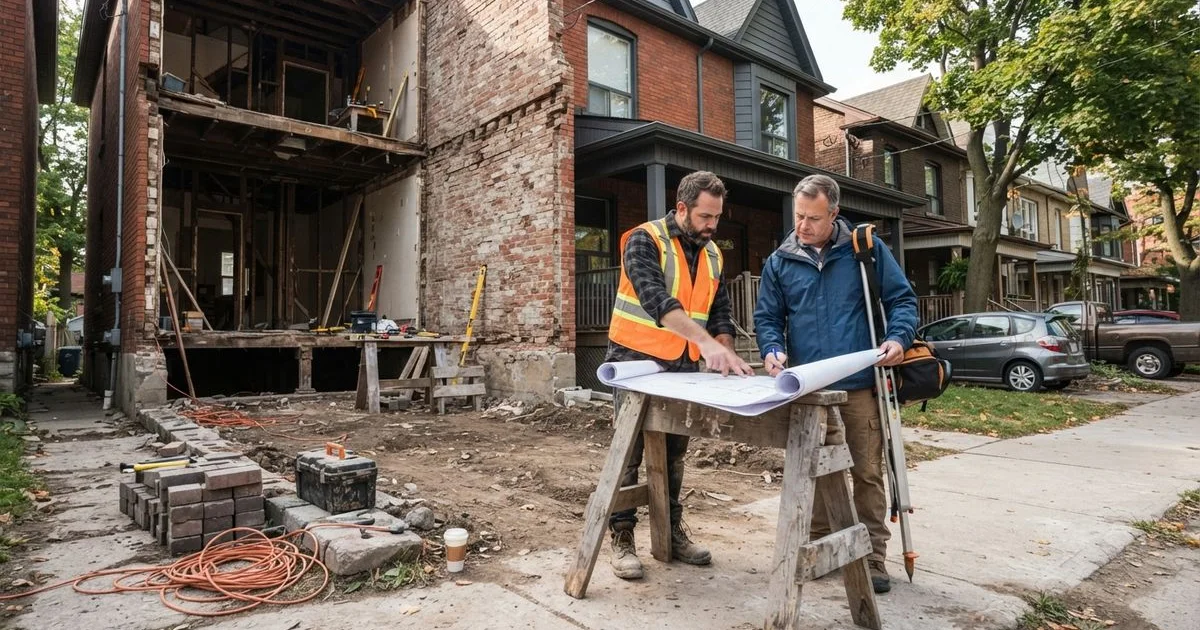
Semi-detached houses, townhouses and some older commercial buildings in Ontario often share a structural wall between two separate properties. When one side of that wall comes down as part of a demolition, the legal and structural questions get more complicated than a standalone teardown, and it’s worth understanding before work starts, not after something cracks.
What makes a party wall different
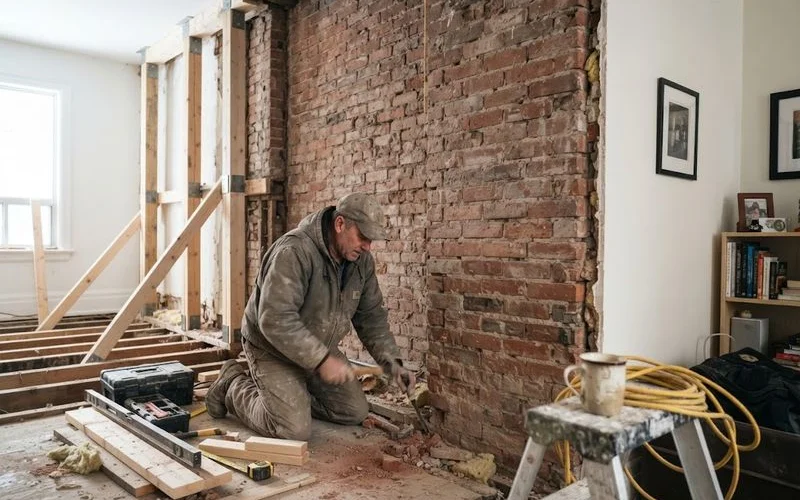
A party wall sits on or straddles a boundary line and provides structural support to both adjoining properties. Demolishing a structure attached to one side of it isn’t like demolishing a freestanding building: removing support from one side can affect the structural integrity of the other, and any damage, cracking, or water intrusion that results can become a liability issue between neighbours.
Where liability typically falls
Generally, the property owner performing demolition near a party wall carries responsibility for damage caused to the adjoining property, especially if proper precautions, like shoring or a structural assessment, weren’t taken beforehand. This is one reason licensed demolition contractors carry liability insurance specifically for this kind of work.
That said, liability isn’t automatic or one-sided in every case. Pre-existing damage, inadequate original construction, or a neighbour’s own later modifications can all complicate who’s actually responsible if a dispute arises. This is genuinely a case-by-case legal question, not something a general guide can resolve for your specific situation.
Steps to protect yourself before work starts
- Notify your neighbour in writing well before demolition begins, describing the scope of work and how the shared wall will be protected.
- Get a written party wall agreement if the work involves anything structural, ideally reviewed by a lawyer familiar with property law in your municipality.
- Have the wall’s condition documented before work starts, with photos and, ideally, a written assessment, so any pre-existing cracks or issues are on record before demolition begins.
- Confirm your contractor’s liability insurance covers third-party property damage, and get it in writing.
- Consider a structural engineer’s assessment for anything beyond a simple, small-scale removal, especially on older construction where the wall’s condition may not be obvious from the outside.
A shared-wall situation often comes up during the municipal review too; the demolition permit process guide covers how that gets flagged before a permit is issued.
| Step | Why it matters |
|---|---|
| Written notice to neighbour | Establishes the timeline and scope on record |
| Party wall agreement | Sets expectations and responsibilities before work starts |
| Pre-work condition documentation | Protects both sides if a dispute arises later |
| Contractor liability insurance confirmed | Covers accidental damage during the work |
| Structural engineer assessment | Flags risk before it becomes an expensive surprise |
When to bring in a lawyer
If your neighbour disputes the plan, if the wall shows existing structural issues, or if the demolition involves anything beyond a straightforward, well-documented removal, a property or real estate lawyer familiar with Ontario’s party wall considerations is worth the consultation fee. Resolving a disagreement before demolition starts is far less costly than resolving one after damage has already occurred.
Choosing a contractor with real experience working near shared structures also matters here. You can browse contractors on the Ontario Excavation & Demolition Directory and see how listings are scored for track record in our ranking methodology, and ask directly about their experience with party wall situations before you hire.
What a party wall agreement typically covers
A written agreement usually spells out the scope of the planned work, the schedule, how the shared wall will be protected or temporarily supported during demolition, and how any resulting damage will be assessed and resolved. It also often includes an agreed process for a follow-up inspection once work is complete, giving both neighbours a documented baseline to compare against if a dispute arises later.
If damage does occur
If a neighbouring property is damaged during demolition despite precautions, document it immediately with photos and notify your contractor’s insurer as soon as possible. Prompt documentation and communication tend to resolve these situations far more smoothly than a delayed or informal response, which can turn a straightforward insurance claim into a drawn-out dispute between neighbours.
This guide is general information about how these situations commonly play out, not legal advice. Property line and liability disputes are fact-specific, so speak with a lawyer about your particular property and neighbour situation.
FAQ
- What is a party wall exactly?
- It's a wall shared between two adjoining properties, common in semi-detached houses and townhouses. Because both owners share it, demolition work near or on it usually requires written agreement between neighbours before work starts.
- Do I need my neighbour's permission before demolishing next to a party wall?
- In most cases yes, in writing. Removing a structure attached to a shared wall without notifying the adjoining owner can expose you to liability if their property is damaged.
- What if my neighbour won't agree to demolition near a party wall?
- This is where a written party wall agreement or, if needed, legal advice becomes important. Some municipalities have processes for resolving these disputes; a real estate or property lawyer can advise on options specific to your situation.
- Does my contractor's insurance cover damage to a neighbour's property?
- Most licensed demolition contractors carry liability insurance for exactly this kind of incident, but confirm coverage details before work starts rather than assuming it's automatic.