Emergency demolition in Ontario: what to do when a structure isn't safe
By Sofia Vogel · Updated 2026-08-18
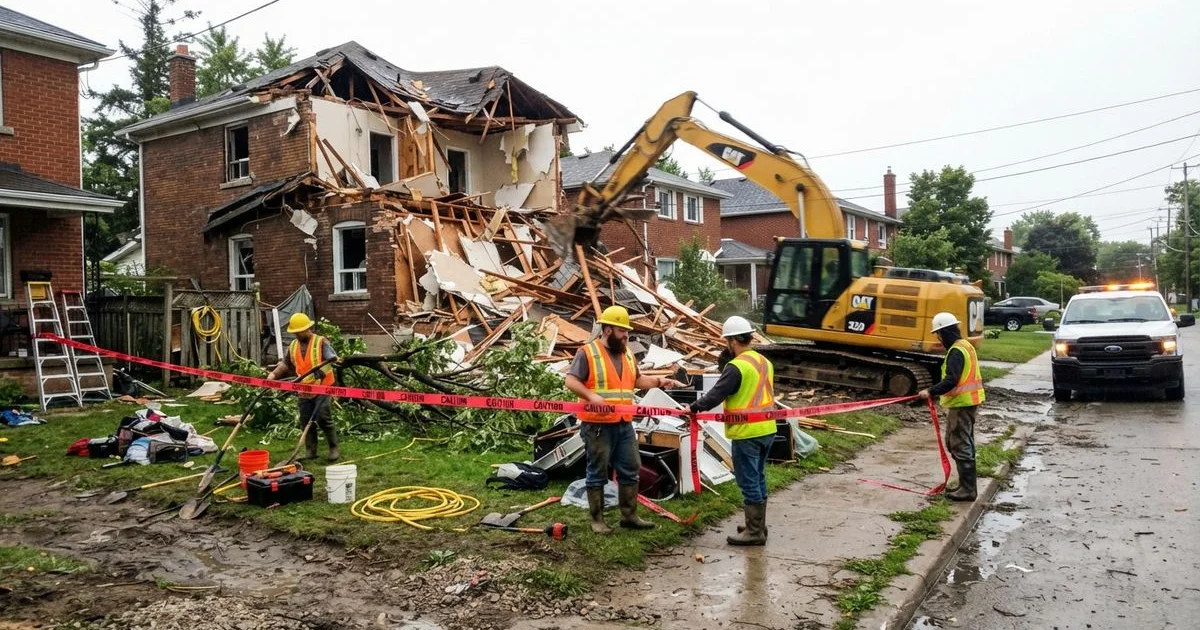
Not every demolition follows a calm timeline of quotes, permits and scheduled work. Sometimes a structure becomes dangerous fast, after a fire, a severe storm, a partial collapse, or long-term neglect that finally reaches a breaking point. Here’s what actually happens when demolition becomes an emergency rather than a planned project.
What qualifies as an emergency
A structure is typically treated as an emergency demolition case when it poses an immediate risk to public safety: a wall or roof at risk of collapse, fire damage that’s compromised structural integrity, or storm damage that’s left a building unstable. A municipal building inspector or fire official usually makes this determination and can issue an order requiring the property to be secured or demolished quickly.
How the process differs from a planned demolition
| Step | Planned demolition | Emergency demolition |
|---|---|---|
| Permit timeline | Weeks of review | Expedited, sometimes concurrent with work |
| Contractor scheduling | Booked in advance | Mobilized within hours to days |
| Hazardous material testing | Done before work starts | May happen in parallel or immediately after securing the site |
| Property owner involvement | Full control over timing | Often responding to a municipal order |
| Cost documentation | Itemized quote in advance | Documented as work proceeds, for insurance and municipal records |
What to do first
- Secure the immediate area if it’s safe to do so, keeping people away from the structure.
- Contact the municipality if they haven’t already been in touch, especially if the danger resulted from a fire or storm and hasn’t yet been assessed.
- Call your insurer as soon as possible if the damage stems from a covered event like fire or storm, since documentation before demolition matters for the claim.
- Get a contractor experienced in emergency response on site quickly. Not every demolition company offers rapid mobilization, so this is worth confirming before you need it, not during the emergency itself.
- Keep records of everything: photos, the municipal order if one was issued, and all invoices tied to the emergency work.
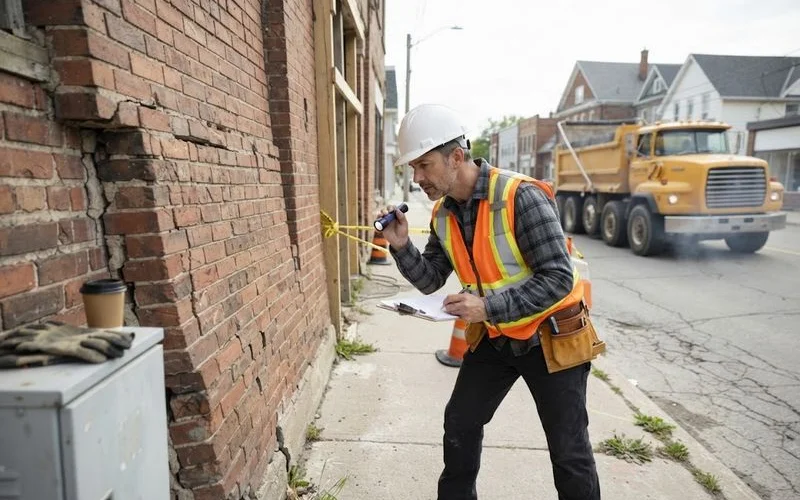
Hazardous material still matters, even in an emergency
It might seem like urgency overrides the usual step of testing for asbestos or other designated substances, but most emergency processes still require this to be addressed, sometimes concurrently with securing the site rather than fully beforehand. A contractor experienced in emergency work will know how to sequence this safely without adding unnecessary delay.
After the demolition
Once the structure is down, the same steps apply as any demolition: debris disposal, final grading, and closing out any permit or insurance documentation. If the emergency was tied to an insurance claim, keep every invoice and photo, since insurers often review emergency demolition costs closely given the compressed timeline and reduced ability to get competing quotes.
Why picking a contractor before the emergency matters
Emergency situations don’t leave much room to compare quotes or check references the way a planned demolition does. If you own an older property, a rental unit, or a building in an area prone to storm damage, knowing which local contractors offer emergency response before you need one can save critical time. Some contractors publish their response capability directly; others are worth a quick call ahead of time to ask.
What a municipal order actually requires
If a building official issues an order to demolish or secure a structure, read it carefully for the specific deadline and scope. Some orders require only securing the structure (boarding it up, fencing the area) as an interim step, with full demolition following on a slightly longer timeline. Others require full demolition within a short window. Understanding exactly what’s required, and by when, helps you and your contractor plan the response without over- or under-reacting to the order.
Costs in an emergency situation
Emergency work often costs more than a planned demolition of similar scope, reflecting the rapid mobilization, potential overtime labour, and reduced ability to shop around for competitive quotes. If insurance is involved, document this context clearly, since insurers generally understand that emergency response carries a premium, but it helps to have that reflected in the invoice rather than left unexplained.
You can browse 24/7 emergency demolition contractors in Ontario on the Ontario Excavation & Demolition Directory and see how listings are scored for responsiveness in our ranking methodology before you need one urgently, not after.
FAQ
- How fast can emergency demolition happen after a structure is deemed unsafe?
- Some emergency demolition contractors can mobilize within hours to a day for genuinely dangerous structures, especially if a municipal order requires immediate action. Timelines depend on contractor availability and site access.
- Who decides a structure needs emergency demolition?
- Usually a municipal building inspector or fire official assesses the structure and can issue an order requiring it to be secured or demolished if it poses an immediate danger to the public.
- Do I still need a permit for emergency demolition?
- Municipalities typically have an expedited process for genuine emergencies, but documentation is still required, sometimes completed alongside or shortly after the work rather than fully in advance.
- What if I disagree with an order to demolish my property?
- You generally have a right to appeal or request a second inspection, though the timeline for doing so is often short given the safety concern. Speak with the municipality directly and consider legal advice if the order is disputed.