What to expect during a house demolition in Ontario, step by step
By Sofia Vogel · Updated 2026-08-05
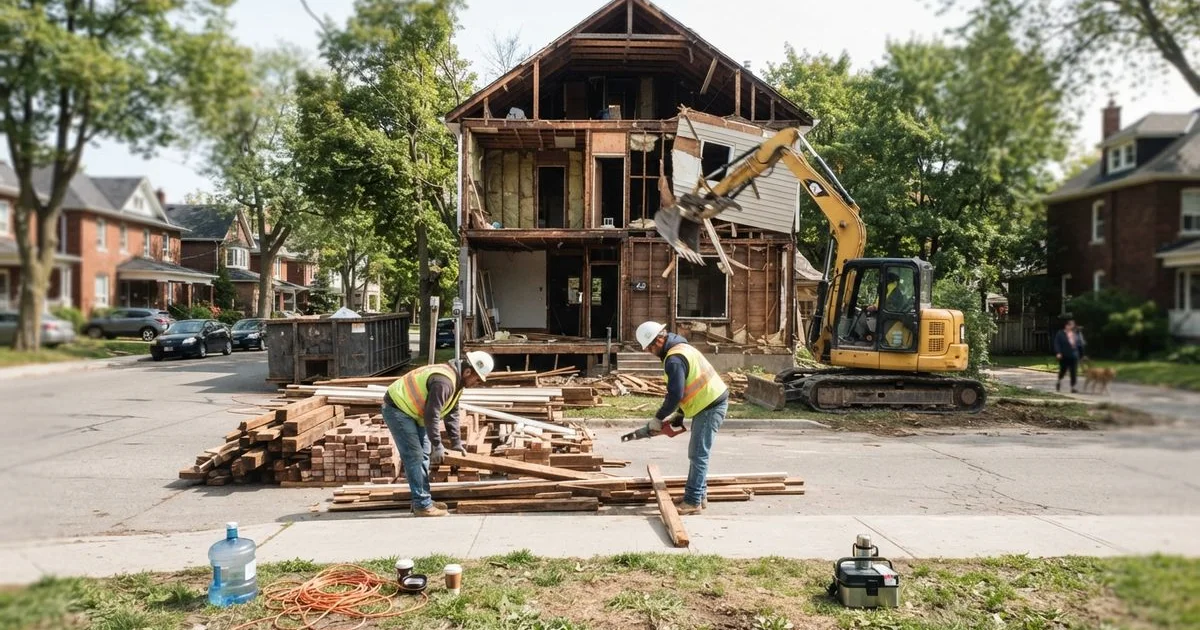
A house demolition looks straightforward from the outside: a machine shows up, the building comes down, a truck hauls it away. In practice there’s a sequence of steps before and after the visible part, and knowing them ahead of time makes the whole project less stressful. This guide from the Ontario Excavation & Demolition Directory lays out that sequence plainly, start to finish.
Step 1: Survey and quote
A contractor walks the property, notes the structure type, size, access constraints and anything unusual (a shared wall, mature trees close to the foundation, overhead wires). This is also when they’ll flag whether a Designated Substances Survey is needed to check for asbestos, lead or other regulated material before work can proceed.
Step 2: Permits and utility disconnection
Most Ontario municipalities require a demolition permit before work starts, separate from any building permit for what comes after. Utilities need to be safely capped or disconnected too: gas, electrical, water and sometimes cable or telecom lines. This stage is usually the longest part of the whole process, often taking two to six weeks depending on the municipality’s processing time and utility scheduling.
Step 3: Site prep
Before the structure comes down, the crew clears the immediate work area, sets up any required fencing or hoarding for safety and dust control, and confirms the survey results if hazardous material testing was required. If abatement is needed, it happens here, separately, before general demolition begins.
Step 4: The teardown
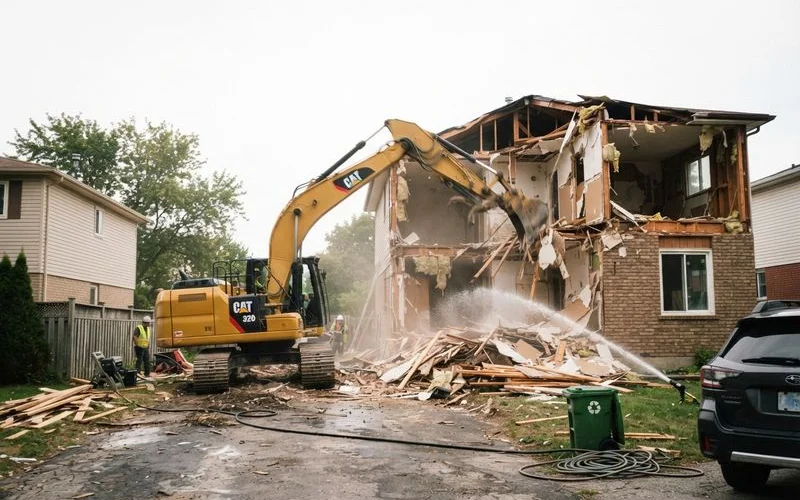
This is the part most people picture. For a typical wood-frame or brick house, the physical demolition itself is often done in one to three days using an excavator with the right attachment for the material, sometimes a hydraulic breaker for masonry or a shear for steel elements. Debris is separated where practical: clean wood and metal often go to recycling, mixed and contaminated material goes to a transfer station or licensed landfill.
Step 5: Debris haul-away and disposal
Trucks move debris off site, usually over the course of the teardown itself rather than after. Disposal fees vary by material and by which facility the contractor uses, which is one of the bigger variables in a final invoice.
Step 6: Final grading
Once the structure and any foundation elements are removed, the lot is graded to a stable, level condition. If a new build is planned, this is also when soil condition gets checked and, if needed, compacted before excavation for a new foundation begins.
| Stage | Typical duration |
|---|---|
| Survey and quote | 1-2 weeks |
| Permits and disconnections | 2-6 weeks |
| Site prep and abatement (if needed) | Varies, days to weeks |
| Physical teardown | 1-3 days |
| Final grading | 1-3 days |
What to ask before you sign
Confirm in writing what’s included: permit handling, utility disconnection coordination, debris disposal, and final grading. Ask how the contractor handles an unexpected find, like buried debris from a previous structure or an underground oil tank, since these do turn up and change scope mid-project. A contractor who’s upfront about how they’d handle a surprise is usually more trustworthy than one who promises a fixed price with no caveats at all.
Living nearby during the work
If you or your neighbours are living close to the site, expect noise, dust, and vibration during the physical teardown, generally contained to the one-to-three-day window when the structure actually comes down. Contractors typically water down debris and the work area to control dust, and a heads-up to neighbours before the loudest day of work tends to go a long way toward keeping things civil.
What a good contractor communicates without being asked
Beyond the technical steps, the difference between a smooth demolition and a frustrating one often comes down to communication. A contractor who proactively confirms the permit status, flags the utility disconnection date, and gives you a heads-up before the teardown day itself is doing the parts of the job that don’t show up in a quote but matter just as much as the equipment work.
After the invoice
Once the project wraps up, keep the final invoice, the permit closure documentation, and any lab results from hazardous material testing together. If you sell the property later or apply for a new building permit, having this paperwork organized saves time explaining what happened to the previous structure.
You can compare residential demolition contractors in Ontario and see how listings are scored for responsiveness and completed-job history in our ranking methodology before requesting quotes.
FAQ
- How long does a house demolition take from start to finish?
- The physical teardown of a typical house is often done in one to three days once permits and disconnections are complete. The permit and prep stage before that usually takes several weeks.
- Do I need to be present during the demolition?
- Not for the physical work itself, but you should be reachable, and it helps to walk the site with the contractor beforehand to confirm what's being kept versus removed, like fencing or landscaping.
- What happens to the debris?
- It's sorted where possible and hauled to a transfer station or landfill. Many contractors divert recyclable material like clean wood, metal and concrete rather than sending everything to landfill.
- Is the lot ready to build on right after demolition?
- Not immediately. Final grading, removing the foundation if required, and sometimes a soil or compaction check happen after the structure is down and before a new build can start.